

From the bell before dawn to the last song at the fire: what an ordinary day will look like on Spiritual Land. Not a festival day, an ordinary one.
This is not a festival day. Festival days are their own thing, loud and full and over too soon. This is the ordinary day, the one that happens on the land when nothing is scheduled and twenty people are there because they wanted to be. It is imagined, because there is no land yet. It is also the most concrete thing we can say about what we are building.
Before the bell
Dark still, or just not. The land is silent by agreement until the bell rings: no music, no talking above a murmur, no phones out where others can see them. Some people are already up. One is sitting on the flat stone by the water with a blanket. One is doing something slow and physical in the meadow. The fire keeper from last night is checking the ash. The birds have the place.
Then the bell, from the sound temple, three times. Not loud. It carries because everything else is quiet.
Morning
Movement or sitting, for those who want it: a body practice in the meadow, a meditation in the temple, a walk alone to the edge of the forest. Half an hour, then the smell of breakfast.
Breakfast at the long table. One table, however many people, and if there are too many the table is longer. Hands washed at the basin before sitting down, because that is what people do here, and nobody remembers who started it. Porridge, bread, eggs from the birds, fruit from whatever is in season, coffee for the ones who need it and cacao for the ones who prefer it. A short circle at the end: who is here, what needs doing today, who is holding what. Ten minutes.
Work
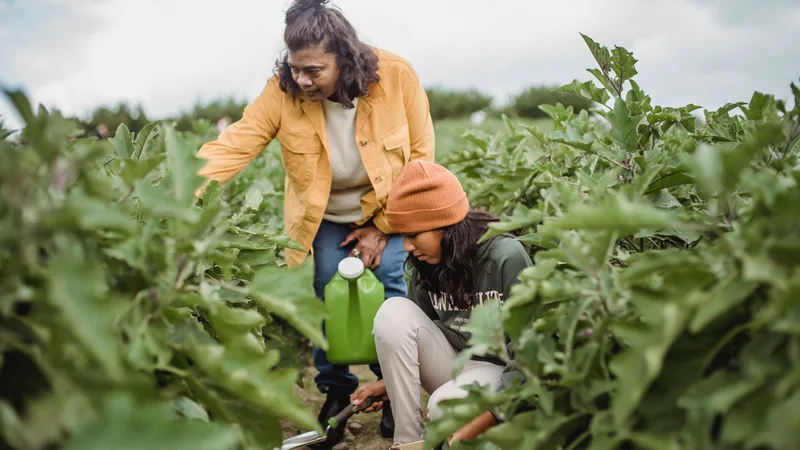
Then the land. An hour, or a morning, from everyone who is staying. The garden needs weeding, the compost turning, the paths clearing after the storm. Somebody is building the frame for the new shelter and needs hands. Somebody is in the kitchen. The children are with the animals, or in the river with a known adult in sight, or building something unspeakable out of willow. Nobody is a guest and nobody is staff. It is the quickest way to understand where you are, and by the second day people are arguing about the best way to stack firewood, which is the sound of belonging.
The long middle
Lunch, also at the table. And then the middle of the day, which is long and slow on purpose. This is the part most places programme, and the part we will not.
People swim. Somebody is asleep under a tree. Somebody is reading in the temple. Two people are having the conversation they came here to have. A child has found a frog. The musician in residence is trying a new song under the oak and does not mind if you listen. Nothing is scheduled between lunch and the evening circle, and it is where the land does most of its work.
Evening
The light changes and the land turns toward it. Sunset is met at the fire, which the keeper has been building since five. Dinner, at the table, and then the circle: everyone, in a ring, one true thing about the day, no interrupting, no fixing. It takes as long as it takes.
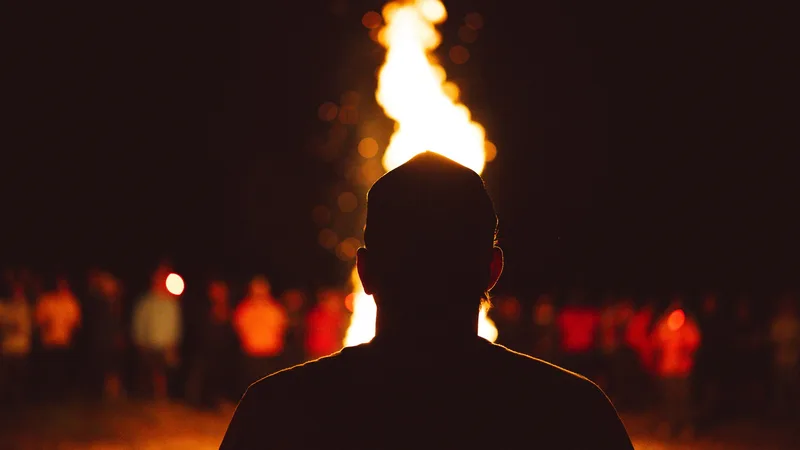
Then the fire. Guitars come out, or a drum, or nothing. The day is talked through. Somebody starts the song everyone learned last summer. The children’s fire, some nights, is thirty metres away and louder. Lanterns along the paths, warm and low. Above, because there is nothing lit up for miles, the whole sky.
Quiet hours arrive and are real. The fire keeper stays until the fire is out. The land goes silent again until the bell.
The same day, always
That rhythm does not change. It is the same with twelve people on the land and with twelve hundred, and it is the first thing a newcomer learns, mostly by watching. On gathering days it fills up with music and ceremony and a stage and the whole loud joy of it. But underneath, the bell, the table, the work, the long middle, the circle, the fire. That is the place. Everything else is weather.
Questions this piece raises
Is this a festival day?
Do I have to get up for the dawn bell?
Photo: Quang Nguyen Vinh via Pexels. Places shown are not Spiritual Land; the land has not been found.
More from the journal
Join the circle