
The name is Spiritual Land and the word deserves a plain explanation: what sacred means on the land, why there is no doctrine, how the inner life stays honest.
Put the word spiritual in a name and you inherit a lot of baggage. Half the people who read it picture incense and a guru. The other half picture a church. We mean neither, and the site’s anchor line, the sacred space for your true self, needs unpacking before it can be trusted.
Sacred is an agreement
A meadow is a meadow. Then twelve people sit in a ring in it at dusk and agree, mostly without saying so, that for the next hour nobody will interrupt, nobody will fix, nobody will look at a phone, and what is said stays here. For that hour the meadow is sacred. In the morning it is a meadow again and somebody is playing football on it, and that is fine.
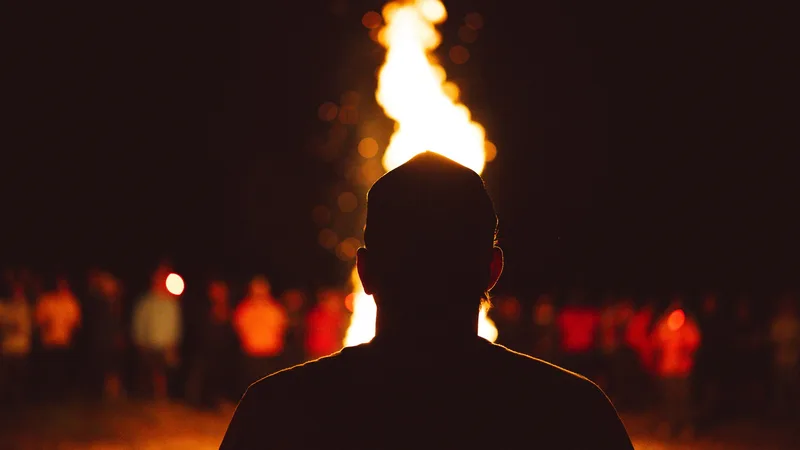
Sacredness, on the land, is a property of the agreement and not of the ground. It is what happens when people decide to protect a space from the ordinary noise long enough for something else to happen in it. The land will have permanent versions of that, a sound temple, a fire circle, a quiet corner in the forest, but they are only sacred because people keep agreeing that they are. A temple with no agreement is a shed.
True self is the unperformed one
Most of adult life is performed. Not dishonestly; just performed, the way you perform being fine at work and reasonable with your family and interesting at dinner. The performance is exhausting and most people have stopped noticing that they are doing it.
True self, in the anchor line, means the version of you that shows up when nothing is being performed. It is not a higher self or a secret self. It is just you, with the performance switched off. Most people meet that version briefly, at three in the morning, or on a mountain, or in the week after someone dies. The land exists to make the meeting more likely, and to give it somewhere to go afterwards.
That is the whole of what we mean by spiritual. The part of a person that knows it is more than a job and a feed, given room.
No doctrine, no guru
The land will be full of practice. People bring what they carry: yoga, prayer, meditation, breathwork, song, plant ceremony where it is legal and safely held, the simple habit of sitting still at dawn. All of it is welcome. All of it is offered, never imposed. The morning silence and the shared meals are the fabric of the land and everyone is asked to respect them; everything else is an invitation you can decline without explaining yourself.
There will be no doctrine that everyone signs. There will be people who hold ceremony, and they will be trusted because they have earned it, in person, over years. But nobody’s word is final, including ours. The moment a place like this gets a leader whose opinion ends a conversation, it has stopped being a place and started being a following. We have watched that happen elsewhere and it always ends the same way.
Dirt under its nails
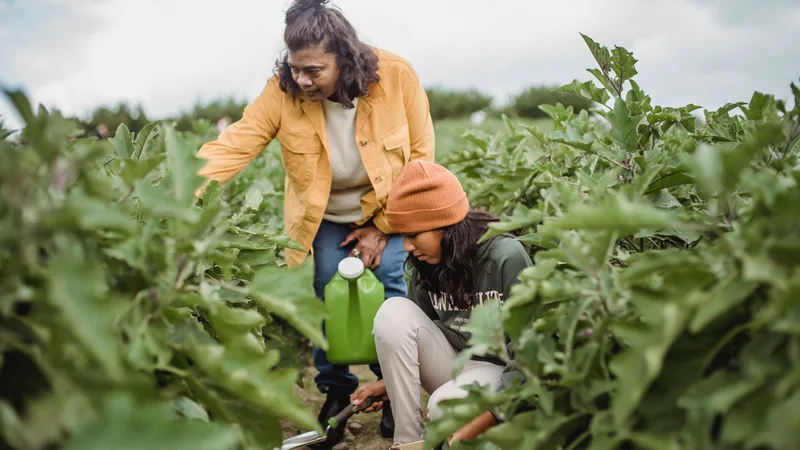
The last thing, and the thing that keeps all of the above honest. Spirituality on the land is attached to real work, real people and real weather. You meditate, and then you dig. You sit in ceremony, and then you wash the cups. The person who has just planted forty trees is much less likely to say something vague about energy. The person who has done the compost toilets is much less likely to believe they are enlightened.
This is not a discipline imposed on the inner life. It is what the land does to it naturally. A field does not care how open your heart is; it cares whether you closed the gate. That is the most spiritual thing about it.
Questions this piece raises
Do I need to believe anything to be welcome on Spiritual Land?
Will there be a spiritual leader or teacher?
Photo: mali maeder via Pexels. Places shown are not Spiritual Land; the land has not been found.
More from the journal
Join the circle